


If you want to catch more trout, you have to stop fishing the same three flies all year and start fishing what the trout are actually eating. The best flies for trout by season change as the water warms, cools, and the bugs come and go, so the angler who reads the calendar (and the river) wins. This guide breaks down exactly what to tie on through spring, summer, fall, and winter, with go-to patterns and sizes for each.
Match the Hatch: The One Rule That Matters Most
“Match the hatch” sounds advanced, but it is simple. At any given time, trout key in on whatever food is most abundant and easiest to eat. That might be mayflies drifting on the surface, nymphs tumbling along the bottom, or a baitfish darting through a run. Your job is to offer a fly that imitates that food in size, shape, and color, then present it the way the natural moves.
You do not need an entomology degree. You need to look. Flip a few rocks to see what nymphs are crawling around. Watch the surface for rising fish and floating bugs. Notice what is in the air. When in doubt, match the size first, then the silhouette, then the color. A fly that is the right size and roughly the right shape will out-fish a perfect color in the wrong size every time. If you are brand new to all of this, start with our guide on how to get started fly fishing and come back to dial in your fly selection.
One more thing to understand before we get into seasons: trout eat in three broad ways, and your fly box should cover all of them. Dry flies float on the surface and imitate adult insects. Nymphs drift below the surface and imitate the immature, underwater stage of those same insects, and this is where trout do most of their feeding, roughly eighty percent of the time. Streamers imitate baitfish, leeches, and other large prey, and they trigger the predatory, chase-and-kill instinct in bigger trout. Each season favors a different mix of these three, and that is the real point of fishing by the calendar.
Spring: Trout Wake Up and Feed
As water warms out of winter, trout metabolism climbs and they start feeding hard. Spring brings some of the most reliable hatches of the year, and fish will move into faster water to take advantage of them. Early in the season, trout still hold in slower, deeper water, so nymphs and streamers shine. As hatches build, the dry fly action turns on.
The signature spring hatch on most rivers is the Blue-Winged Olive (BWO), a small mayfly that loves overcast, drizzly days. The Pheasant Tail Nymph imitates its nymph stage perfectly. Caddis also start popping in mid to late spring, and on many tailwaters you will see your first midges.
- Dry flies: Blue-Winged Olive (sizes 16 to 20), Parachute Adams (sizes 14 to 18), Elk Hair Caddis (sizes 14 to 16)
- Nymphs: Pheasant Tail Nymph (sizes 16 to 20), Hare’s Ear (sizes 14 to 18), beadhead midge or Zebra Midge (sizes 18 to 22)
- Streamers: Woolly Bugger in black or olive (sizes 6 to 10) for high, off-color runoff water
When spring runoff blows out the river and the water turns muddy, do not give up. Tie on a dark Woolly Bugger and fish it slow along soft edges and seams where trout hide from the current. In dirty water, trout cannot see far, so a bigger, darker profile that pushes water and stays in the strike zone longer will out-produce a tiny dry fly. As the water clears and warms into the upper forties and low fifties, switch your focus to nymphs in the riffles, and keep an eye on the afternoon for that BWO hatch. Spring rewards anglers who fish through the changing conditions instead of waiting for perfect ones.
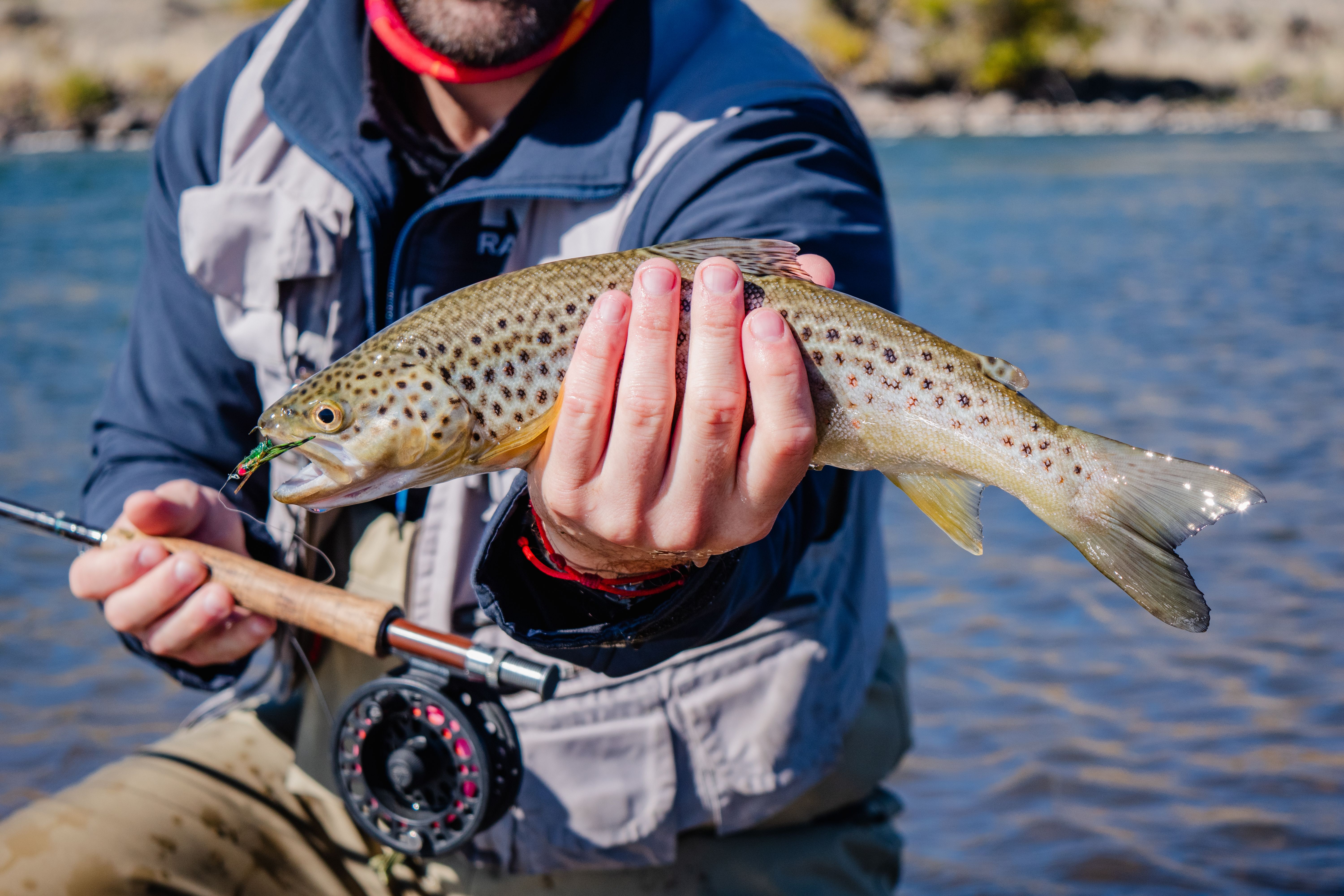
Summer: Terrestrials and Early-Morning Hatches
Summer is prime time, but warm water changes the game. Trout often feed hardest in the cool of early morning and late evening, then get sluggish in the midday heat. This is when terrestrials (land-based insects like grasshoppers, ants, and beetles) become a major food source, especially on freestone streams with grassy banks.
The Pale Morning Dun (PMD) is the classic summer mayfly hatch, usually coming off in the morning. Caddis stay strong all summer, and evening caddis flurries can produce frantic surface feeding. When nothing is hatching, a big foam hopper is one of the most fun and effective ways to fish.
- Dry flies: Pale Morning Dun (sizes 14 to 18), Elk Hair Caddis (sizes 14 to 18), foam hopper patterns (sizes 8 to 12), ant and beetle patterns (sizes 12 to 16)
- Nymphs: Pheasant Tail Nymph (sizes 14 to 18), Hare’s Ear (sizes 12 to 16), caddis pupa patterns (sizes 14 to 16)
- Streamers: Woolly Bugger (sizes 8 to 10) fished early or late when light is low
A reliable summer trick is the hopper-dropper rig: tie a hopper on top as your indicator and hang a beadhead nymph 18 to 24 inches below it. You cover the surface and the subsurface at the same time, and the trout tell you which they want. Make sure your kit is up to the task with our fly fishing gear for beginners guide.
One important note for summer: when water temperatures climb into the upper sixties and beyond, trout get stressed and a caught fish may not survive release. If you have a stream thermometer, check the water, and once it pushes past about 68 degrees, fish early, fish a cold tailwater, or simply call it a day and let the trout rest. Fishing the cool hours is not just more productive, it is the responsible choice.
Fall: Aggressive Trout and Streamer Season
As days shorten and water cools again, trout feed aggressively to fatten up for winter. Brown and brook trout also move toward spawning, which makes them territorial and willing to chase. This is the time of year that streamer anglers live for, because big fish will smash a baitfish imitation.
Blue-Winged Olives make a strong comeback in fall, again favoring gray, overcast days. October caddis show up on many western rivers as a large, orange-bodied bug worth imitating. But the headline of fall is the streamer bite. Strip a big fly through a deep run and hold on.
- Dry flies: Blue-Winged Olive (sizes 16 to 20), Parachute Adams (sizes 14 to 18), October Caddis (sizes 8 to 10)
- Nymphs: Pheasant Tail Nymph (sizes 16 to 20), Hare’s Ear (sizes 14 to 16), egg patterns where spawning fish are present (sizes 12 to 16)
- Streamers: Woolly Bugger (sizes 4 to 8), larger articulated streamers in white, olive, or black
Strip your streamer with varied speed and pauses. Often the eat comes the instant you stop and let the fly sink. Cast toward the bank, let the fly swing through the deep water, and do not be afraid to fish a fly that looks too big. Fall trout are bulking up and a meaty meal is worth the effort to them. If spawning fish are on redds (those clean gravel nests), leave them alone and target the actively feeding trout downstream instead. Walking through a redd or hooking spawning fish damages the next generation, and a good angler protects the resource.
Winter: Slow Down and Go Small
Winter trout are not gone, they are just slow. Cold water drops their metabolism, so they hold in deep, slow pools and barely move to eat. You have to fish small, fish deep, and fish patiently. The good news is that winter rivers are quiet and beautiful, and the fish that are willing to eat are very catchable.
Midges are the dominant winter food, hatching even on freezing days, often around midday when the water is warmest. On a calm, sunny afternoon you may even spot trout sipping clusters of midges on the surface, which is where the Griffith’s Gnat earns its keep.
- Dry flies: Griffith’s Gnat (sizes 18 to 22), Blue-Winged Olive on warmer days (sizes 18 to 22)
- Nymphs: Zebra Midge (sizes 18 to 24), Pheasant Tail Nymph (sizes 18 to 20), small Hare’s Ear (sizes 16 to 18)
- Streamers: small Woolly Bugger (sizes 8 to 10) fished very slowly through deep pools
Drift your nymphs right along the bottom where the trout are sitting, and slow everything down. A dead-drift through a deep winter pool, repeated patiently, is your best bet. Add a small split shot if you are not ticking bottom, because in winter the fly has to come right to the fish. Lengthen your leader and lighten your tippet to 5X or 6X, since cold, clear water makes trout wary. Fish the warmest part of the day, usually late morning to mid-afternoon, and do not expect fast action. Two or three good fish on a cold day is a real success, and the solitude is its own reward.
The Year-Round Confidence Box
If you want a small set of patterns that catch trout in every season, build a confidence box around these proven flies. When you are unsure what to tie on, reach for one of these and fish it well.
- Parachute Adams (sizes 14 to 18): the most versatile dry fly ever tied, it imitates a huge range of mayflies
- Pheasant Tail Nymph (sizes 16 to 20): a mayfly nymph imitation that works all twelve months
- Hare’s Ear Nymph (sizes 14 to 18): a buggy, suggestive pattern that could be almost anything edible
- Zebra Midge (sizes 18 to 22): deadly on tailwaters and in winter, but useful everywhere
- Woolly Bugger (sizes 6 to 10): the do-everything streamer in black and olive
- Elk Hair Caddis (sizes 14 to 16): a floating, visible dry that covers caddis activity spring through fall
Carry those six in a couple of sizes and you can walk up to almost any trout water with confidence, no matter the time of year.
Conclusion: Fish the Season, Catch More Trout
The best flies for trout by season come down to a simple habit: pay attention to the water, the weather, and the bugs, then match what the trout are eating. Fish nymphs and streamers in early spring, ride the hatches and terrestrials through summer, throw streamers in fall, and go small and slow in winter. Keep your year-round confidence box stocked for the in-between days.
Now grab a handful of these patterns, get to the river, and put the season to work for you. Tie one on, make a good drift, and go catch a trout.
Last modified: June 19, 2026
