


Walk into any fly shop and the wall of gear can make a new angler feel like the hobby costs a fortune before the first cast. It doesn’t. The truth is that the right fly fishing gear for beginners is a short, honest list, and most of what you see on those shelves is for problems you don’t have yet. In this guide you’ll learn exactly what to buy now, what to skip, and how to spend a starter budget without wasting a dollar.
The Core Setup: Rod, Reel, and Line
Almost everything you’ll do as a new fly angler runs through three pieces of gear. Get these right and the rest falls into place.
The Rod: A 9ft 5wt Is Your Do-It-All Starter
If you remember one thing, remember this: a 9-foot, 5-weight rod is the single most versatile choice for a beginner. It handles trout in most rivers and lakes, throws a wide range of fly sizes, and is forgiving enough to learn on. The 9-foot length gives you reach and line control, and the 5-weight has the backbone for wind without being so heavy it beats you up on small water.
Look for a medium action (sometimes called moderate action). Fast-action rods are stiffer and demand better timing, which works against you while you’re still learning to feel the cast. A medium-action rod loads more slowly and tells you what it’s doing. Entry-level rod families like the Orvis Clearwater, Redington Classic Trout, and budget Wild Water combos all exist in this 9ft 5wt range and are built specifically for people starting out. You do not need a premium rod to learn well.
The Reel: Mostly a Line Holder for Now
For trout-sized fish, the reel does less work than beginners expect. Most of the time you’ll be stripping line in by hand, not fighting fish off the drag. So don’t overthink it. You want a reel that balances your rod (it should be sized for a 5-weight line) and has a simple, smooth drag. Sealed drags and machined aluminum are nice, but they are not requirements on day one. A reasonable mid-range reel will outlast your beginner phase entirely.
The Fly Line: Weight-Forward Floating Is the Answer
Fly line matters more than your reel, and arguably more than spending up on the rod. For a 5-weight rod, get a weight-forward (WF) floating line in 5-weight. Weight-forward means the casting weight is concentrated near the front, which makes it far easier to cast for someone learning. Floating means the line stays on the surface, which is what you want for the dry flies and shallow nymphing most beginners start with. Skip sinking lines and specialty tapers until you have a specific reason to own them.
The Connection: Backing, Leader, and Tippet
These small items link your fly line to your fly, and they confuse new anglers more than they should.
- Backing: Thin braided line that goes on the reel first, underneath the fly line. It adds reserve line for big runs and fills the spool so the fly line coils less tightly. You need it, but any decent fly shop will spool it for you when you buy your reel and line. This is not something you fuss over.
- Leader: A tapered, nearly invisible length of monofilament that connects to the end of your fly line. For trout, a 9-foot leader in the 4X to 5X range covers most situations. Buy a few pre-made tapered leaders to start. Don’t try to build your own yet.
- Tippet: A spool of level line you tie to the end of your leader to extend its life and present the fly. As you change flies, your leader gets shorter, and tippet replaces what you lose. Grab spools that match your leader size (4X and 5X to begin).
If you want a deeper walkthrough of how these pieces fit together with everything else, our beginner’s guide to getting started in fly fishing lays out the full picture.
Flies: Start Small and Don’t Overbuy
The fly bins are where beginners hemorrhage money. You do not need 200 patterns. A small, smart starter selection will cover most days on the water. Focus on a handful of proven producers in a couple of sizes each:
- Dry flies: An Adams and an Elk Hair Caddis cover a huge range of surface situations.
- Nymphs: A Pheasant Tail and a Hare’s Ear are classics for a reason, and a beadhead version sinks faster.
- An attractor: Something like a Woolly Bugger gives you a streamer option that fish chase aggressively.
Buy a few of each in a small fly box and learn what works in your water before expanding. What you actually want changes with the season, so when you’re ready to fill out the box, lean on a resource like our guide to the best flies for trout by season rather than grabbing whatever looks pretty in the bin.
The Tools and Accessories You Actually Need
A few small tools make every day on the water smoother. These are genuinely “need now” items, and they’re inexpensive:
- Nippers: For trimming knots and tippet. A cheap pair works fine. You don’t need anything fancy here.
- Forceps (hemostats): For removing hooks quickly and safely, which matters for both you and the fish.
- Floatant: A small bottle of gel or powder to keep dry flies riding high. Only needed if you’re fishing dries, but it’s cheap insurance.
- A net: A rubber-mesh net protects fish, makes landing them far easier, and saves a lot of lost catches near the bank. Worth getting early.
That’s the short list. Strike indicators, split shot, and a tippet ring or two are nice add-ons once you start nymphing in earnest, but none of them are barriers to your first trip.
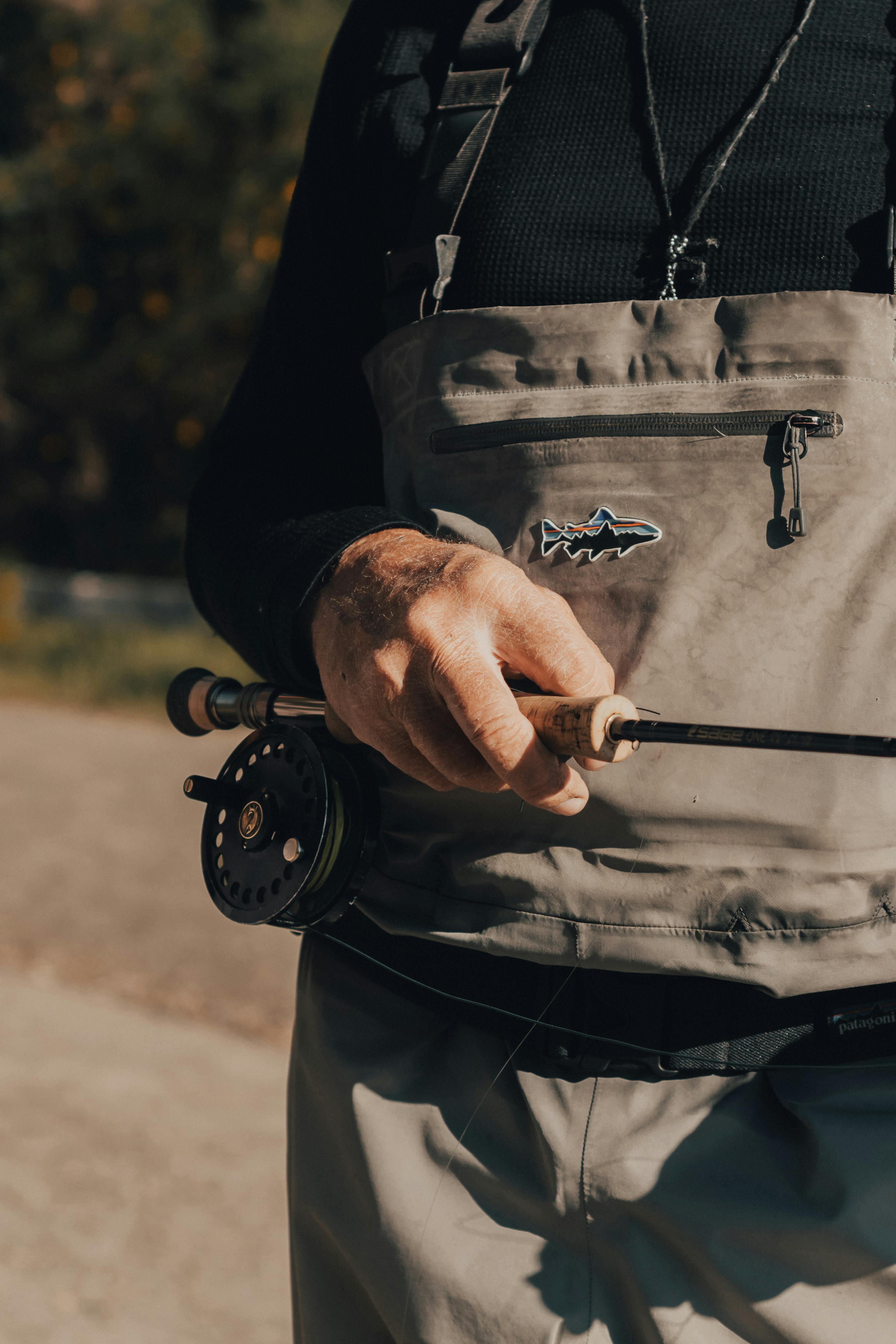
Waders, Boots, and When You Can Skip Them
Here’s where you can save real money: you don’t always need waders to start. If you’re fishing warm-weather rivers in summer, a pair of quick-drying pants and sturdy shoes (wet wading) is completely fine and a lot more comfortable than you’d think. Plenty of good fishing happens from the bank or while standing in ankle-deep water.
You’ll want waders once you fish colder water, deeper runs, or shoulder seasons. When that time comes, breathable stockingfoot waders paired with separate wading boots are the standard. Stockingfoot waders (neoprene sock feet that go inside dedicated boots) give better fit and traction than the cheaper bootfoot style. If your budget is tight, treat this as a “buy later” purchase rather than a first-trip requirement.
A Pack or Vest: Keep It Simple
You need a way to carry flies and tools, but the system barely matters at the start. A simple chest pack or sling pack keeps your essentials in reach and is easy to live with. The classic vest still works great too. Don’t get pulled into an expensive organization system before you even know how you like to fish. Whatever holds a fly box, your tools, leader, and tippet within arm’s reach is enough.
Starter Combos vs. Building Piece by Piece
This is the big decision for most beginners, and the honest answer is that a combo kit is usually the smart move.
A rod-reel-line combo comes pre-matched and often pre-spooled with backing and a leader, so you can fish the day you get it. The components are balanced for you, which removes a real chance of buying mismatched parts. For most new anglers, a quality combo from a reputable maker is the fastest, lowest-stress path onto the water.
Building piece by piece makes sense if you have a specific goal, want to spend up in one area (often the rod), or already know the water you’ll fish. The upside is control. The downside is that it costs more and gives you more ways to get it wrong. If you’re unsure, start with a combo. You can always upgrade individual pieces later as you learn what you actually prefer.
How to Spend a Beginner Budget
You don’t have to spend a lot, but where you put your money matters. Here’s a simple priority order using general ranges rather than exact figures:
- Put your money into the rod and line first. These affect your casting and your learning curve the most. A solid entry-level rod and a quality weight-forward floating line are worth prioritizing.
- Go modest on the reel. For trout, a budget-friendly reel that balances your rod is plenty. Save the upgrade for later or for bigger fish.
- Spend little on flies and tools at first. A small fly selection and basic nippers, forceps, and floatant cost very little. Don’t inflate this category.
- Defer waders if you can. Wet wade through summer, then invest in waders and boots when colder water makes them necessary.
A combo kit plus a few flies, basic tools, and a net will get you fishing for a reasonable, one-time cost. Everything else is an upgrade you make on your own timeline, not a requirement to begin.
Final Thoughts: You Need Less Than You Think
The right fly fishing gear for beginners comes down to a 9ft 5wt medium-action rod, a balanced reel, a weight-forward floating line, a few leaders and tippet spools, a small box of proven flies, and a handful of cheap tools. That’s it. Everything else can wait until you know what you actually want. Don’t let the gear wall intimidate you into overspending or overthinking.
Grab a sensible starter setup, then put it to work. Your next step is learning to throw it well, so head over to our guide on how to cast a fly rod and start practicing. The gear is the easy part. Getting on the water is what makes you an angler.
Last modified: June 19, 2026
