

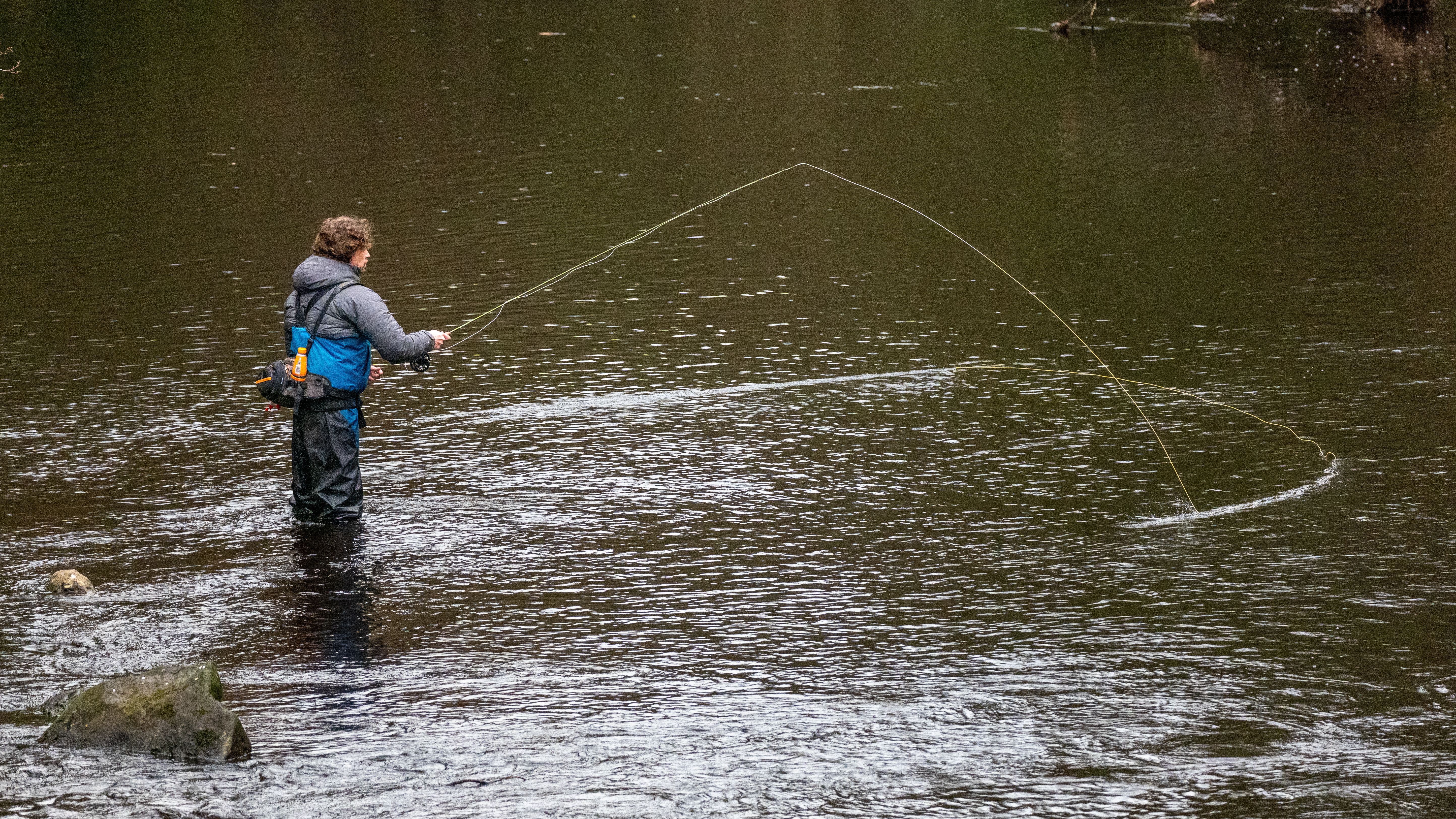
If you want to learn how to cast a fly rod, the first thing to understand is that fly casting is not like any other kind of fishing you have tried. With spinning or baitcasting gear, the weight of the lure pulls the line off the reel. In fly fishing, the lure (the fly) weighs almost nothing, so the line itself carries the weight. You are casting the line, and the fly just goes along for the ride. Once that idea clicks, everything else starts to make sense.
This guide breaks the cast down into clear, repeatable steps. Work through it patiently and you will be putting tidy loops over the water sooner than you think.
Why Fly Casting Is Different
In conventional fishing, you load the rod by hauling against the weight of a heavy lure. In fly fishing, the fly line is the weight. Modern fly lines are thick and have a tapered design specifically so they have enough mass to bend (or “load”) the rod. The rod acts like a spring: you bend it, then release that stored energy to shoot the line forward.
This is why casting a fly rod feels strange to newcomers. You are not throwing the fly. You are using a smooth motion to flex the rod and let it unroll the line. Power comes from timing and technique, not muscle. A ten-year-old can cast a fly rod beautifully, and a strong adult who tries to muscle it will struggle. If you are still gathering your kit, our fly fishing gear for beginners guide covers the matched rod, reel, and line setup that makes learning far easier.
How to Cast a Fly Rod: The Basic Overhead Cast
The overhead cast is the foundation. Master it and most other casts are just variations. Here is how to cast a fly rod step by step.
Step 1: The Grip
Hold the rod like you would shake hands with it, with your thumb resting on top of the cork grip, pointing toward the rod tip. A relaxed grip is essential. If your knuckles are white, you are gripping too hard. Your thumb on top acts as a guide and gives you power at the right moment without forcing it.
Step 2: The Stance
Stand with your feet roughly shoulder-width apart, your casting-side foot slightly back. Square your body toward your target. Keep your posture loose and balanced. Good casting comes from the forearm and wrist working together, not from leaning or lunging.
Step 3: Understand 10 and 2
Picture a clock face standing upright beside you. Twelve o’clock is straight up, three o’clock is in front of you, and nine o’clock is behind you. The classic fly casting motion happens between the 10 o’clock position (slightly in front of vertical) and the 2 o’clock position (slightly behind vertical). Your rod tip should travel back and forth in that tight window. Many instructors now prefer a slightly wider arc, but for a beginner, thinking 10 to 2 keeps your stroke compact and crisp.
Step 4: The Backcast and the Pause
Start with the line extended in front of you on the grass or water. Lift smoothly and accelerate the rod back to the 2 o’clock position, then stop crisply. The stop is what forms the loop. Now comes the part beginners skip: the pause. You must wait for the line to unroll behind you and straighten out. Watch over your shoulder at first. If you start the forward cast too early, you will hear a crack like a whip, which means you broke off momentum (and sometimes your fly).
Step 5: The Forward Cast
Once the line has straightened behind you, accelerate smoothly forward and stop the rod crisply at 10 o’clock. The key phrase is smooth acceleration to a hard stop. Speed builds gradually through the stroke and then ends abruptly. That sudden stop unloads the rod and sends the line shooting forward in a clean loop. Let the line settle gently onto the water and lower the rod tip to follow it down.
Why Rod Loading and Timing Matter Most
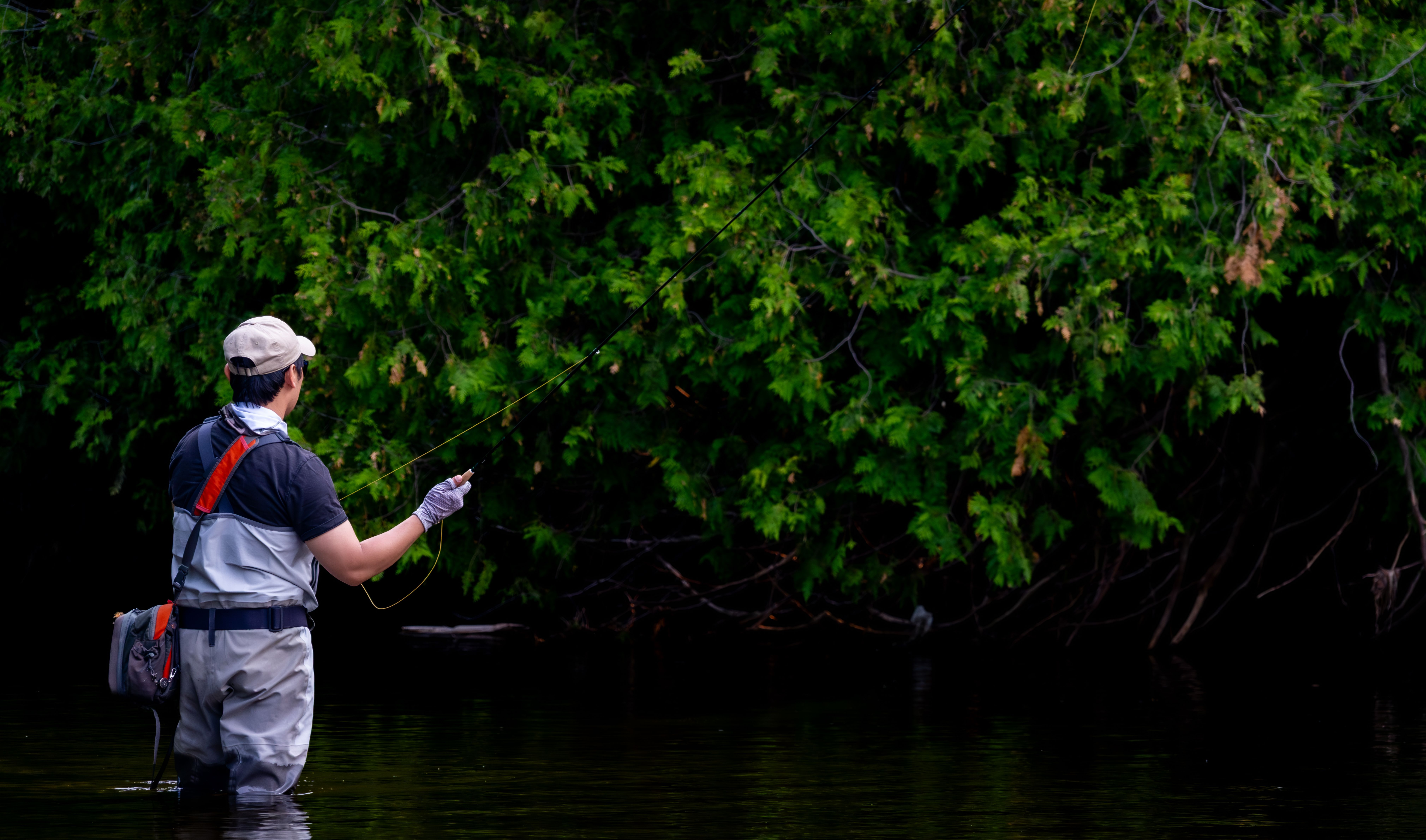
If you remember one thing, remember this: the rod does the work, but only if you let it load. Loading means the line’s weight bends the rod against the direction of travel. You feel it as a gentle pull or tension during the stroke. That tension is the rod storing energy, ready to be released at the stop.
Timing is the partner to loading. The pause between strokes gives the line time to extend so it can load the rod on the next stroke. Rush the timing and the rod never loads properly, so your loops collapse. Slow down, feel the rhythm, and let the rod tell you when it is ready. Casting a fly rod well is more like a metronome than a hammer.
Common Casting Faults and How to Fix Them
Almost every beginner makes the same handful of mistakes. Here is how to spot and fix each one.
- Breaking the wrist. This is the number one fault. If your wrist hinges open too far on the backcast, your rod tip drops well past 2 o’clock and your loop falls apart. Fix it by keeping your wrist firm and leading with your forearm. Some anglers tuck the rod butt against their shirt cuff or forearm as a training aid to stop the wrist from breaking.
- No pause. If you hear a whip-crack or your fly keeps snapping off, you are not waiting for the line to straighten. Slow down and count “and one” on each pause until the rhythm becomes natural.
- Too much power. Muscling the cast creates wide, sloppy loops and tires you out. Ease off. Let the rod and line do the work. A relaxed, well-timed stroke always beats a forceful one.
- Tailing loops. When the line crosses over itself and tangles into a knot (often called a wind knot, though wind is rarely the culprit), you have a tailing loop. It is usually caused by applying power unevenly, punching hard in the middle of the stroke instead of accelerating smoothly. Fix it by making your acceleration gradual and steady from start to stop.
False Casting and When to Use It
False casting is simply keeping the line in the air, going back and forth without letting it land. You make a backcast, a forward cast, another backcast, and so on, while the fly never touches down. It looks impressive, and beginners love to do it constantly, but use it sparingly and with purpose.
False casting has three legitimate uses: to extend more line before your final delivery, to change the direction you are casting toward, and to dry off a waterlogged dry fly. Outside of those reasons, every extra false cast is just another chance to spook fish and tangle your line. Good anglers make the fewest false casts they can get away with. Pick up, one or two false casts to measure the distance, then deliver.
The Roll Cast: Your Essential Second Cast
The roll cast is the other cast every beginner must learn, and in many situations it matters more than the overhead cast. When trees, brush, or a bank sit behind you, there is no room for a backcast. The roll cast solves this because it never sends line behind you.
To make a roll cast, slowly raise the rod until the line slides toward you and hangs in a loop (a “D loop”) between your rod tip and the water behind your shoulder. Pause for a moment to let that loop form, then drive the rod forward and down with a smooth stroke and a crisp stop. The line rolls out across the water in front of you. It takes practice to get the loop right, but on tight, brushy streams the roll cast will quickly become your most-used tool.
A Practice Routine for Real Progress
Here is the single best piece of advice for learning to cast a fly rod: practice on grass first. A mowed lawn or a park field is the ideal classroom. There are no fish to distract you, no water drag, and you can watch your loops clearly. Tie a small piece of bright yarn to your leader instead of a hooked fly so you can practice safely.
Use a simple routine. Spend ten to fifteen minutes a few times a week working through these steps:
- Lay out about 25 to 30 feet of line in front of you to start.
- Practice the pickup and lay-down: lift, backcast, pause, forward cast, set it down. Repeat slowly.
- Focus on one thing per session, such as a firm wrist or a crisp stop, rather than fixing everything at once.
- Watch your backcast over your shoulder so you learn what a properly extended line looks and feels like.
- Once your overhead cast is consistent, add ten minutes of roll cast practice.
Short, frequent practice beats one long, frustrating session. The motion becomes muscle memory faster than you expect, and grass practice transfers directly to the water. For the bigger picture of putting it all together, see our complete guide to getting started in fly fishing.
Get Out There and Cast
Learning how to cast a fly rod is the gateway skill to a lifetime of fly fishing, and the good news is that it is far simpler than it looks. Master a relaxed grip, a balanced stance, the 10 to 2 stroke, and above all the pause that lets the rod load, and you will be casting clean loops in no time. Add the roll cast for tight water and you can fish almost anywhere. So grab your rod, find a patch of grass, tie on some yarn, and start practicing today. The river is waiting, and the only way to get better is to make the next cast.
Last modified: June 19, 2026
